As part of your comprehensive eye exam, we check the pressure of your eye, the Intraocular Pressure (IOP). This test, called tonometry, is one way to see if you are at risk for glaucoma. Regular screenings are a simple way to monitor your eye health. Early detection is essential in the treatment of glaucoma, since many times there are no symptoms with increased pressure, unless it is sudden.
UNDERSTANDING EYE PRESSURE:
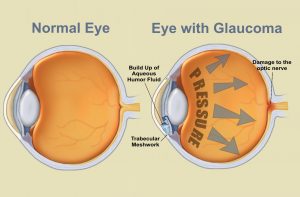
Inside the eye, there is a cycle of fluid production and fluid drainage. This fluid, in the front part of your eye, is called the aqueous humor. The aqueous humor nourishes your eye and helps it to keep its shape. If this cycle is out of balance, and more fluid is produced than can drain effectively, IOP increases. Over time, this increased eye pressure may cause damage to the optic nerve. A general guideline for normal eye pressure is between 10 and 21 mm/hg.
HOW WE MEASURE EYE PRESSURE:
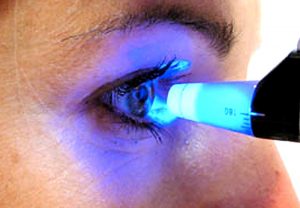
In our office, we measure eye pressure by instilling a drop that numbs your eye. Using a blue light, we then use an applanation tonometer that gently touches the surface of your eye. This painless test is a very effective way of measuring your pressure. It is helpful for the patient to relax and breathe normally while we perform this test.sisipisi.ccsisipisi.ccsisipisi.ccsisipisi.ccsisipisi.cc.
Although there are many other ways of measuring eye pressure, many people are familiar with the “puff of air test”. This test, called non-contact tonometry, uses a rapid air pulse to flatten the cornea. Your pressure is measured by detecting the force of the air against your eye. Although we don’t use this process, often when we ask patients them to “put your chin in the chin rest and forehead against the band” they worry we are going to puff air at them. They don’t seem to like it!
We can’t emphasize enough the importance of comprehensive eye exams. It is especially important to have an eye exam if you have a family history of eye disease, diabetes or high blood pressure. The best way to protect your vision is to come in for an exam, where Dr. Moran will evaluate your risk for disease and advise you of the optimal schedule of visits to protect your eye health.
Patients are curious about what happens during LASIK surgery.
Dr. Moran knows that a well-informed patient makes the best medical decisions. Understanding what happens during LASIK can lead to a more calm and comfortable experience. We’ve highlighted the most commonly asked questions about all-laser LASIK with Intralase. The best way to find out if you are a candidate for this vision correction procedure, is to come in for a free one-hour consult appointment.
LASIK vision correction is a 2-step process.
First, we create the flap in the surface of the cornea.
Second, we lift the flap and apply laser treatment to reshape the corneal tissue.
What is Intralase?
A: The IntraLase Method uses laser light to create a flap in the outer layer of your cornea. The laser creates an even layer of microscopic bubbles under the corneal surface. The flap is hinged, like the page of a book. Dr. Moran then lifts the flap by gently separating the tissue where these bubbles have formed. After the flap is lifted, Dr. Moran moves to the second step of the procedure, applying the laser treatment to reshape the corneasisipisi.ccsisipisi.ccsisipisi.ccsisipisi.cc.
What makes using Intralase technology unique?
A: The IntraLase Method uses a laser to create the flap. This laser-guided application creates a smooth even surface after your flap is lifted.
Are there benefits to using the Intralase Method?
A: Although the risk of flap-related complications with LASIK is very low, with Intralase, the rate of flap complications are further reduced. The flap created by the laser is determined and created by your surgeon, so it is tailored to the contours of your eye.
How long does LASIK surgery take?
A: The total time in the surgery suite takes about 20 minutes. During step 1 of the procedure, creating the flap, the laser application takes about 15-20 seconds per eye. Step 2 of the procedure, applying the laser treatment, depends on your prescription. It can take from just a few seconds, to about one minute per eye. Dr. Moran will let you know the length of your specific treatment. During the laser application, he will count down the seconds, so you know how much time remains. He keeps you informed about what you can expect, every step of the way.
What is the difference between LASIK and PRK (photorefractive keratectomy)?
A: PRK vision correction is done without creating a flap. Instead, PRK starts by removing a small area of tissue on the surface of the cornea. A clear contact lens is placed on the eye after PRK surgery, to aid in comfort while healing. Dr. Moran will remove the contact lens when the cornea is healed, usually about 3 days after surgery. The recovery time for PRK is longer than LASIK. With LASIK you should be able to drive the day after surgery, while after PRK surgery, you may not see clearly enough to drive for a few days. Why do patients choose PRK? PRK is an option for patients who may not be able to have LASIK due to thinner corneas. PRK is also preferred for patients who are at risk for eye injuries, including patients who do boxing, mixed martial arts, or who are joining certain levels of the military.
What is the first test we do when you come into the office for a complete vision exam?
The Autorefractor measures your prescription
We take a measurement of your vision with the AutoRefractor.
Focus on the balloon!
When you take a seat at the autorefractor, we ask you to look into the device. You will see a blurry hot air balloon at the end of a long straight road. As the balloon comes into focus, we measure your prescription.
We ask you to focus on the image (balloon) to keep your eye centered while we take measurements. It only takes just a few seconds to measure using an autorefractor. The balloon is at the center of the image, which aligns your eye perfectly for the test.
The autorefractor provides an objective measurement of a person’s refractive error and prescription for glasses or contact lenses. The device measures how light is changed as it enters your eye.
Better 1 or Better 2?
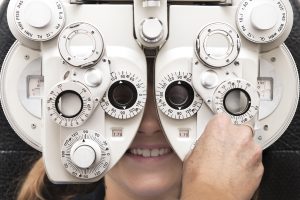
We don’t use the numbers from the device to order your prescription glasses or contacts. The autorefractor is just part of the process. The information from the autorefractor is used as a starting point to determine your best prescription. We take these numbers and dial them into the phoropter.
Here is where your opinion comes in. As we cycle through lenses, we ask, “Is it Better 1 or Better 2?” Your responses help us to pinpoint your best vision. When we show you different choices, we aren’t trying to trick you! We are showing you different options to find your best correction.
Why do we use a balloon photo?
The image isn’t important, but the need to focus on something at a distance is key to a good measurement. The balloon is just one of many visual targets used in the autorefractor. Besides the hot air balloon, other popular images include: a pinwheel/peppermint candy, a house (or barn) at the end of a road, a house in the middle of a field.
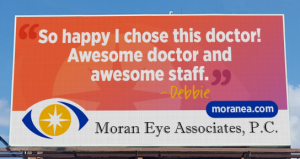
This summer, Moran Eye Associates will be featured on electronic billboards around the Lehigh Valley. Choosing the content of the billboards was easy…our patient reviews speak volumes about our practice! We are proud of our reputation for excellence.
Look for our colorful billboards throughout the Lehigh Valley!
Our staff is committed to patient education.
Dr. Tang is terrific and very thorough!
Our doctors and staff are proud to be called “awesome”!
Dr. Moran and Dr. Tang are now accepting new patients. We offer medical, surgical and vision care to people of all ages. If you would like to make an appointment, just fill out the information to the right. You can also call or text us at 610-628-2022.
We are happy to offer your family the kind of quality eye care that our patients are talking about! Click here for more Patient Reviews
Two years have passed since the start of Moran Eye Associates in Fountain Hill! We are so happy to have welcomed Dr. Moran’s former patients and many new patients too!
Although our practice is young, we’ve all been together for a long time. Here is a look at Moran Eye Associates by the numbers.
Dr. Moran has been practicing in the Lehigh Valley since 1990. He started Moran Eye Associates in April of 2017, where he continues to provide quality, compassionate medical and surgical care for his patients.
(again!) Dr. Moran’s first employee was Beth Handwerk, who was a member of the team at Trachtenberg-Moran. After almost 30 years, Beth & Dr. Moran are still working together. Beth is the office manager here at Moran Eye Associates.
Mandy Bolton & Cindy Male both started working with Dr. Moran at the turn of the century! They have been part of Dr. Moran’s team for 19 years.
Bobbi has worked with Dr. Moran’s surgical patients since 2011. Starting first as his LASIK coordinator, she now works with cataract patients too.
Dr. Tang joined our growing practice one year ago. She quickly became an essential part of our team. Dr. Tang has expertise in all aspects of medical eye care, contact lenses and low vision devices.
The numbers add up to an experienced team of eye care professionals that continue to work together to give our patients quality eye care. You can benefit from our commitment to our patients by making an appointment for yourself and your family!
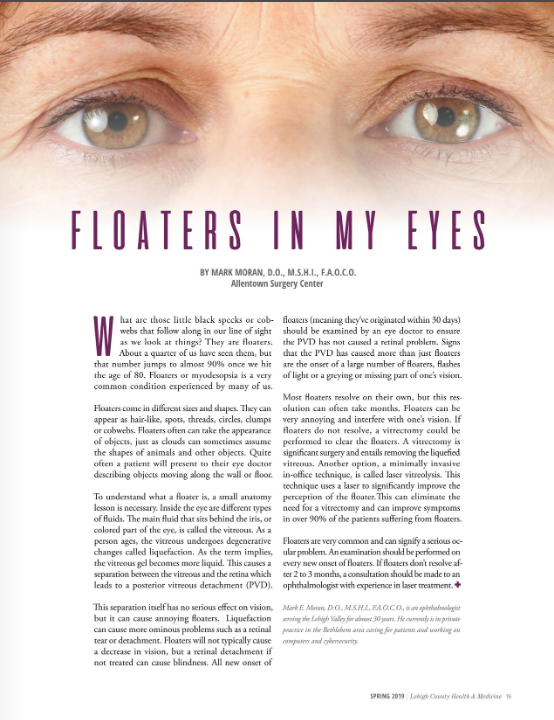
Dr. Moran was recently published in Lehigh County Health & Medicine magazine. The article “Floaters in My Eyes” discusses the occurrence of floaters and treatment options now availablesisipisi.ccsisipisisisipisi.ccsisipisi.cc.
Dr. Moran has been successfully treating floaters with an in-office laser procedure, called Vitreolysis. This treatment option targets floaters with laser energy. The laser pulses change the collagen of the floater into a gas, removing it from the patient’s vision.
To read more of the articles in this publication, click here.
 In our office, we measure eye pressure by instilling a drop that numbs your eye. Using a blue light, we then use an applanation tonometer that gently touches the surface of your eye. This painless test is a very effective way of measuring your pressure. It is helpful for the patient to relax and breathe normally while we perform this test.sisipisi.ccsisipisi.ccsisipisi.ccsisipisi.ccsisipisi.cc.
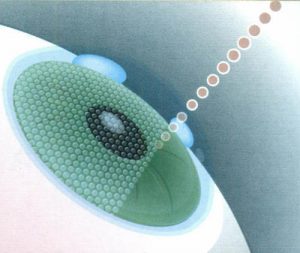 A: The IntraLase Method uses laser light to create a flap in the outer layer of your cornea. The laser creates an even layer of microscopic bubbles under the corneal surface. The flap is hinged, like the page of a book. Dr. Moran then lifts the flap by gently separating the tissue where these bubbles have formed. After the flap is lifted, Dr. Moran moves to the second step of the procedure, applying the laser treatment to reshape the cornea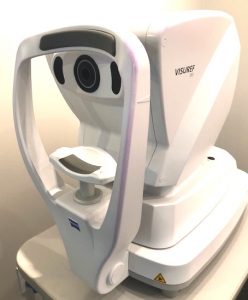






 Dr. Moran has been practicing in the Lehigh Valley since 1990. He started Moran Eye Associates in April of 2017, where he continues to provide quality, compassionate medical and surgical care for his patients.
 (again!) Dr. Moran’s first employee was Beth Handwerk, who was a member of the team at Trachtenberg-Moran. After almost 30 years, Beth & Dr. Moran are still working together. Beth is the office manager here at Moran Eye Associates.
 Mandy Bolton & Cindy Male both started working with Dr. Moran at the turn of the century! They have been part of Dr. Moran’s team for 19 years.
 Bobbi has worked with Dr. Moran’s surgical patients since 2011. Starting first as his LASIK coordinator, she now works with cataract patients too.
 Dr. Tang joined our growing practice one year ago. She quickly became an essential part of our team. Dr. Tang has expertise in all aspects of medical eye care, contact lenses and low vision devices.